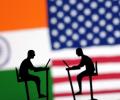
A Parliamentary Standing Committee on Commerce has urged the Indian government to swiftly conclude the proposed India-US Bilateral Trade Agreement (BTA), while ensuring India's interests are protected, recommending complete exemption for key export products like generic medicines and smartphones from future US tariff increases.

US President Donald Trump stated that the US and India are 'pretty close' to finalising a trade deal, which he expects to be significantly different from previous agreements. This announcement comes amidst ongoing discussions between officials from both nations, including Secretary of State Marco Rubio's visit to India and Commerce Minister Piyush Goyal's meetings with US Trade Representative Jamieson Greer, following an initial framework agreement in February.

US Secretary of State Marco Rubio is on a three-day visit to India to discuss bilateral ties in energy, trade, investment, defence, and critical technologies, as well as the West Asia crisis. His visit aims to strengthen the India-US Comprehensive Global Strategic Partnership amidst existing friction, with a focus on finalising a proposed bilateral trade deal.

While India and the US have narrowed their differences, the remaining issues will be the hardest to resolve

Marco Rubio will visit Mumbai and Jamnagar to discuss energy cooperation as S Jaishankar says India-US trade talks are nearing a landing point, with a few issues unresolved.

Prime Minister Narendra Modi and Russian President Vladimir Putin held extensive discussions to strengthen bilateral trade, defence, and energy cooperation, while also addressing the ongoing Ukraine conflict and exploring avenues for peace and resolution, with Modi reiterating India's call for dialogue and diplomacy.

Finance Minister Nirmala Sitharaman announced that India is set to introduce a new, more investor-friendly bilateral investment treaty (BIT) framework, which is expected to receive Cabinet approval shortly, aiming to provide sharper protection for investors from both sides.

External Affairs Minister S Jaishankar will host US Secretary of State Marco Rubio in Mumbai on October 20 for talks aimed at strengthening the Comprehensive Global Strategic Partnership. Discussions will cover energy, trade, defence, and critical technologies. The visit also includes celebrations for the 250th anniversary of US Independence. This meeting follows earlier confusion regarding Rubio's visit and will also touch upon the India-US bilateral trade agreement, which both sides are close to concluding. The MEA clarified that hosting foreign dignitaries outside Delhi is a common practice.

US Secretary of State Marco Rubio kick-started a three-day visit to India on Tuesday to advance bilateral ties in energy, trade and investment, defence, critical technologies, and exchange views on the West Asia crisis.
New Zealand Prime Minister Christopher Luxon stated that the historic Free Trade Agreement with India, now in effect, will help grow both economies, allowing Kiwi businesses to reach over a billion more customers with significantly reduced tariffs, leading to 'more jobs and higher wages for Kiwis'.

Prime Minister Narendra Modi and US President Donald Trump held a telephone conversation to review progress in bilateral ties, covering trade, defence, and energy, against the backdrop of heightened trade friction due to the 'Lindsey O. Graham Sanctioning Russia and Iran Act of 2026'.

The escalation in the diplomatic row between India and Canada will not have an impact on the bilateral trade and investment ties between the two countries, government sources said on Tuesday. They also said that the bilateral trade value is not significant and Canadian funds can route their investments through Singapore, the UAE and the US. "India is a preferred investment destination," they said.

Finance Minister Nirmala Sitharaman stated that negotiations for the India-US trade agreement have reached a 'plateau', indicating limited scope for further concessions from either side, while also highlighting the US's aim to reduce its trade deficit with India.

Pakistan and the Maldives have signed 20 Memorandums of Understanding (MoUs) covering defence, maritime security, artificial intelligence, trade, and other sectors during Maldivian President Mohamed Muizzu's three-day visit to Islamabad. The agreements aim to significantly boost bilateral cooperation and trade, with Pakistan also offering technical expertise and educational opportunities.
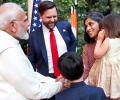
Prime Minister Narendra Modi and US Vice President JD Vance have expressed satisfaction with the progress made in negotiations for a bilateral trade agreement. The two leaders met in New Delhi and discussed a range of bilateral issues, including cooperation in energy, defense, strategic technologies, and other areas. They also exchanged views on regional and global issues of mutual interest.

Russia remains India's biggest fertiliser supplier, with imports rising nearly 40 per cent in 2025.

The United States and the European Union have strongly criticised India's trade policies at the World Trade Organization review, highlighting concerns over high tariffs, quality-control orders (QCOs), and restrictions on digital trade and services, which they argue undermine India's economic openness.

The United States has announced a new round of trade measures against Canada, including bans on Canadian dairy, alcoholic beverages, and motorcycles, and reshuffled existing tariffs. This escalation comes after Canada imposed retaliatory tariffs on American goods. The US administration cited Canada's retaliatory actions as the trigger, contrasting it with other nations that chose negotiation over retaliation.

The United Arab Emirates (UAE) has expressed intent to invest an additional $25 billion in India, with an ultimate goal of reaching $100 billion in investments, Union Minister Piyush Goyal announced. This comes as both nations plan to enhance cooperation in shipping, ports, energy, and emerging technologies, against a backdrop of expanding bilateral trade.

'We are open to all countries around the world as long as we get a fair deal, as long as we are ensured continuity in the engagement.'

'We expect the Indian delegation to flag New Delhi's worries and elaborate on its standpoint on the Russia-linked tariff as well as the Section 301 investigation into overcapacity.'

'It is a blunt and dangerous attempt to pressure India to sign BTA on one-sided terms.'

The United States and India are on the verge of finalising a landmark bilateral trade deal, aiming to boost trade to USD 500 billion by 2030, according to US Deputy Assistant Secretary of State Bethany Poulos Morrison. The agreement seeks to open India's 1.4 billion-strong market to American goods on reciprocal terms, with ongoing high-level discussions to recalibrate the pact after recent changes in US tariff policy.

Prime Minister Narendra Modi and US President Donald Trump are set to hold comprehensive talks focusing on a bilateral trade deal, defence cooperation, and energy and critical minerals sectors during the G7 summit in Evian-les-Bains, France.

President Droupadi Murmu hosted Swiss President Guy Parmelin at a banquet featuring exquisite delicacies from Jammu and Kashmir and Ladakh. The curated menu highlighted unique regional ingredients and culinary traditions, serving as a cultural exchange alongside significant bilateral discussions on trade, migration, nuclear energy, and defence.

A US trade representative described India as a 'tough nut to crack' during trade agreement negotiations in Washington, highlighting India's protection of its agricultural markets and the ongoing discussions on specific commodities.

External Affairs Minister S Jaishankar met his Chinese counterpart Wang Yi in Manila, reiterating that peace and tranquillity in border areas are prerequisites for normal India-China relations. He stressed the importance of mutual respect, interest, and sensitivity, while also raising concerns about market access, trade imbalance, and supply chain uncertainties.

US Secretary of State Marco Rubio visited Reliance Industries' Jamnagar refinery, a day after calling India a crude oil refining 'superpower', and met with top Indian business leaders Gautam Adani and N Chandrasekaran to advance bilateral ties in energy, trade, investment, and defence.

BRICS members have expressed 'serious concerns' over the unilateral imposition of trade and finance-related measures, including higher tariffs and non-tariff barriers, stating these actions distort trade and are inconsistent with WTO rules. The grouping also highlighted elevated risks to the global economic outlook due to geopolitical tensions, trade fragmentation, and protectionism.

Citing the need for a more liberal regime for the banking and financial sector, RBI has opposed bilateral trade agreements. With no multilateral pacts with the WTO, the government had entered into free trade agreements, whose scope was later expanded to services, investment and even bilateral tax treaties. RBI has urged other countries such as UK, US and Europe to show reciprocity in granting branch licenses to Indian banks as they expect a similar treatment from India.
India and the United States have reviewed progress on a proposed interim bilateral trade agreement, discussing market access, digital trade, and non-tariff barriers, as they race to finalise a deal before a temporary 10 per cent US tariff regime expires on July 24.

China has emerged as India's largest trading partner in 2025-26, with bilateral trade reaching USD 151.1 billion, while India's trade deficit with Beijing widened to an all-time high of USD 112.6 billion.
Claiming his recent visit to India was a "big success", Ilyas Ahmed Bilour, president of the Indo-Pak Chamber of Commerce, has said the two countries should work towards improving the bilateral trade.

Ahead of President Vladimir Putin's visit to India for the BRICS summit, Russia has expressed support for New Delhi's peace initiatives to resolve the Ukraine conflict. Discussions between Putin and PM Modi will cover defence, energy, technology, and the repatriation of Indian nationals from the Russian military, alongside addressing trade and investment ties.

Bangladesh has confirmed that Prime Minister Tarique Rahman will not attend the upcoming BRICS Summit in India, clarifying that the invitation was extended to him as the BIMSTEC Chair, not as Bangladesh's Prime Minister. The nation is prioritising bilateral visits and discussions, while also addressing national interests like the expiring Ganges Water Sharing Treaty.
Xi brought in asymmetrical power play by stating that India should have 'strategic cognition' and 'strategic judgement made on the basis of the stage of development the two countries are at'. This is a very nuanced way of asserting China's coercive diplomatic posture and reflects Beijing's penchant to unleash border instability at will, restrict rare earth metal exports, exert pressure on India at global and regional orders, asserts China expert Srikanth Kondapalli.

Russian President Vladimir Putin has arrived in India for a three-day visit to attend the BRICS summit and hold bilateral talks with Prime Minister Narendra Modi, focusing on expanding trade, investment, and energy cooperation amidst global geopolitical challenges.

'India should not trade away its energy security for temporary tariff relief. Neither signing a trade agreement nor stopping Russian oil purchases can protect it from future US action.'
India is waiting for assurance from the US on comparative advantage over other economies under the deal.
The India-Oman free trade agreement, operationalised on June 1, is set to create significant export opportunities for India's labour-intensive and value-added sectors, including textiles, gems and jewellery, and marine products, while also strengthening energy security.
